
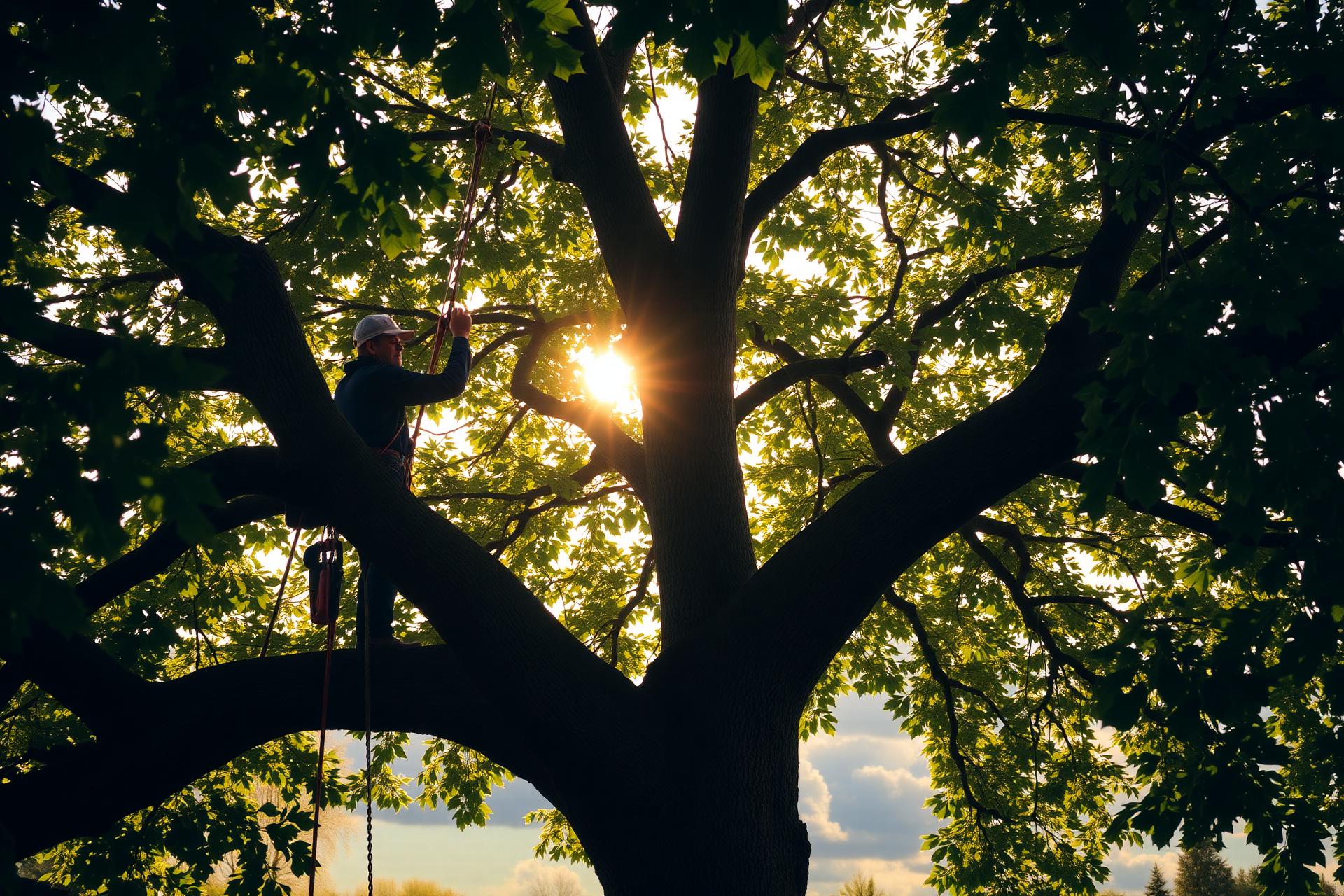
The work is done, the chippings are cleared, and the tree looks significantly different. What happens now, and what do you actually need to do?
The honest answer: not much. A tree that has been properly reduced by a qualified arborist is not a patient in need of intensive care. But there are a handful of things worth watching for in the weeks and months that follow, and a couple of mistakes that homeowners sometimes make that undo a good job.
The first few weeks
Fresh pruning cuts will be visible. This is expected and normal. A healthy tree responds to pruning wounds by forming callus tissue around the edges of the cut, gradually sealing it over. This process, called compartmentalisation, is how trees manage injury. The process can take several growing seasons for larger cuts, so do not be alarmed if wounds are still visible the following year.
Do not apply wound sealant or pruning paint. This is a persistent piece of folk wisdom with no scientific support. Research has consistently shown that wound paints do not accelerate healing and can actually impede the compartmentalisation process by trapping moisture. Leave the cuts exposed.
Watering and soil
If the work was done during dry summer months, the tree may benefit from additional watering during any dry spells in the weeks immediately after reduction. Apply water slowly to the root zone, roughly the area beneath the outer edge of the original canopy, rather than directly at the base of the trunk.
Avoid disturbing the soil beneath the tree for at least a growing season. Compaction and root damage slow recovery.
What to watch for
| Sign | What it likely means | Action |
|---|---|---|
| Vigorous new shoots from cut points | Normal regrowth response | No action needed; monitor |
| Epicormic shoots along trunk or major limbs | Heavy stress response or over-reduction | Flag to arborist at next inspection |
| Weeping or oozing from cuts | Sap bleed (common in birch, cherry), usually harmless | Monitor; contact arborist if persistent |
| Large wounds not beginning to callus after 12 months | Possible decay or health issue | Arrange an inspection |
| Significant dieback since the work | Tree may have been in poor health before reduction | Arrange an inspection |
Epicormic growth
After a crown reduction, many trees respond with a flush of new growth from dormant buds along branches or the trunk. These are called epicormic shoots, and a modest amount is normal. In vigorous species like lime, sycamore, and London plane, it can be prolific.
Some of these shoots will become part of the tree's new crown. Others will need removing at a follow-up visit. Left entirely unmanaged, epicormic regrowth can return a tree to its pre-reduction size within a few years, particularly in fast-growing species. This is not a sign the work failed, it is just how trees respond, and it is why many arborists recommend follow-up selective work at intervals of two to five years depending on species.
When to call the arborist back
- The tree has developed a pronounced lean that was not there before
- A substantial limb has cracked or split at or near a pruning point
- You have noticed significant deadwood developing in the crown within the first year
- You are concerned about anything that does not look right
A good arborist will want to know if something unexpected is happening after their work. Do not wait for the next scheduled visit if something seems wrong.
A quick note on timing your next inspection
For most deciduous trees in good health, a follow-up inspection within two to three years of reduction work is sensible. The Arboricultural Association's guidance on tree inspection intervals varies by species, condition, and environment, a mature oak in a rural garden and a lime tree overhanging a pavement are in very different situations. An arborist can advise on what is appropriate for your specific tree after the initial reduction.
Questions about your tree's recovery? Get in touch, we are happy to take a look.