
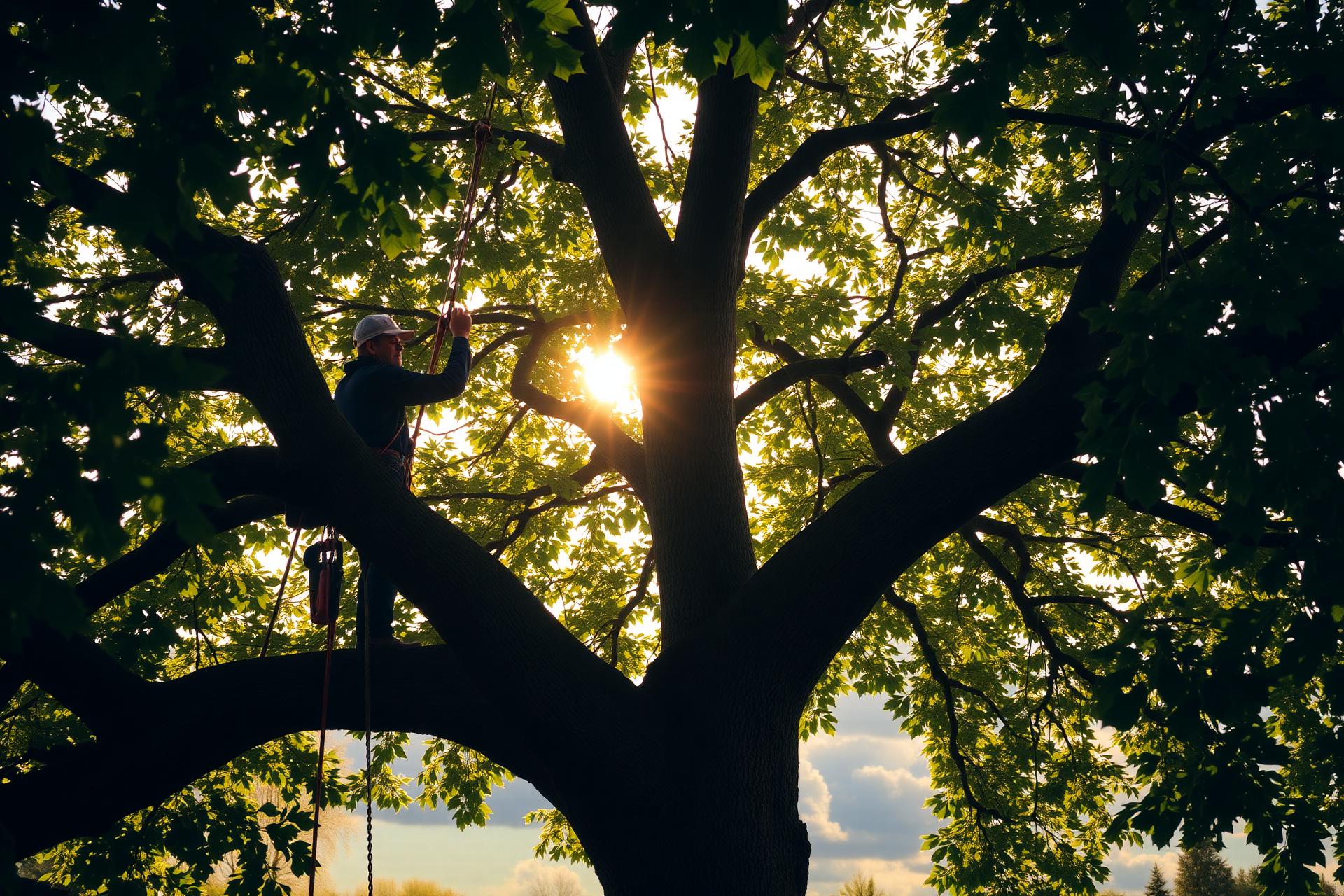
Vertical Crown Reduction
Bring the top of the tree down by cutting leaders back to lower laterals.
Overview
What height reduction actually involves
A vertical (or height) reduction shortens the upper canopy by cutting the main leader (or leaders) back to a strong lower lateral branch. It's the right call when a tree is too tall for its surroundings but its width is fine.
The leading shoots and upper crown are shortened to lateral branches at least one third the diameter of the cut, so growth is redirected outward rather than producing a stub. Often used to lower a tree below a roofline or out of a flight path of overhead cables.
Typical reduction
2–4 m off the height
Results last
4–6 years
Impact on tree
Medium
Best for
- Trees taller than their setting can sustain
- Reducing wind exposure on top-heavy crowns
- Pulling a crown clear of overhead lines
- Reducing visual impact for neighbours or planners
Not ideal for
- Conifers without strong lower laterals
- Where the desired reduction would exceed 30% of the crown
Pros & cons
- Visible reduction in scale without losing the tree
- Reduces wind-throw risk on exposed sites
- Compatible with most mature broadleaves
- Limited by where suitable laterals exist
- May require staged reductions over multiple seasons
How it compares
Height Reduction vs other reductions
| Reduction type | Best for | Typical reduction | Results last | Impact on tree |
|---|---|---|---|---|
| Total Reduction | Large trees encroaching on buildings or power lines | 10–30% of canopy | 3–5 years | Medium |
| Width Reduction | Branches overhanging roofs, conservatories or garages | 1–3 m off the spread | 3–4 years | Low |
| Height Reduction This page | Trees taller than their setting can sustain | 2–4 m off the height | 4–6 years | Medium |
| Selective Reduction | Storm-damaged or split limbs | 1–4 limbs treated | Permanent for removed limbs | Low |
All four reduction types we carry out, with the page you're on highlighted.
How we do it
On-site process
- 1. Survey identifies suitable lateral cut points.
- 2. Climber sets anchors above the working zone.
- 3. Leader shortened back to chosen lateral; cut sealed cleanly.
- 4. Surrounding upper canopy tidied to maintain shape.
- 5. All material lowered, chipped and removed.
Still not sure?
Vertical Crown Reduction FAQs
Is height reduction the same as topping?
No. Topping cuts indiscriminately to a flat height and damages the tree. A vertical reduction always cuts back to a viable lateral so growth continues naturally.
How much height can you take off?
Typically 2–4 m, capped at around 30% of the live crown. We'll tell you on survey what's achievable on your specific tree.
Related
Other reduction types
Tree outgrown its setting? Let's reduce it properly.
Free no-obligation site visit, fixed quotes, UK-wide coverage.