
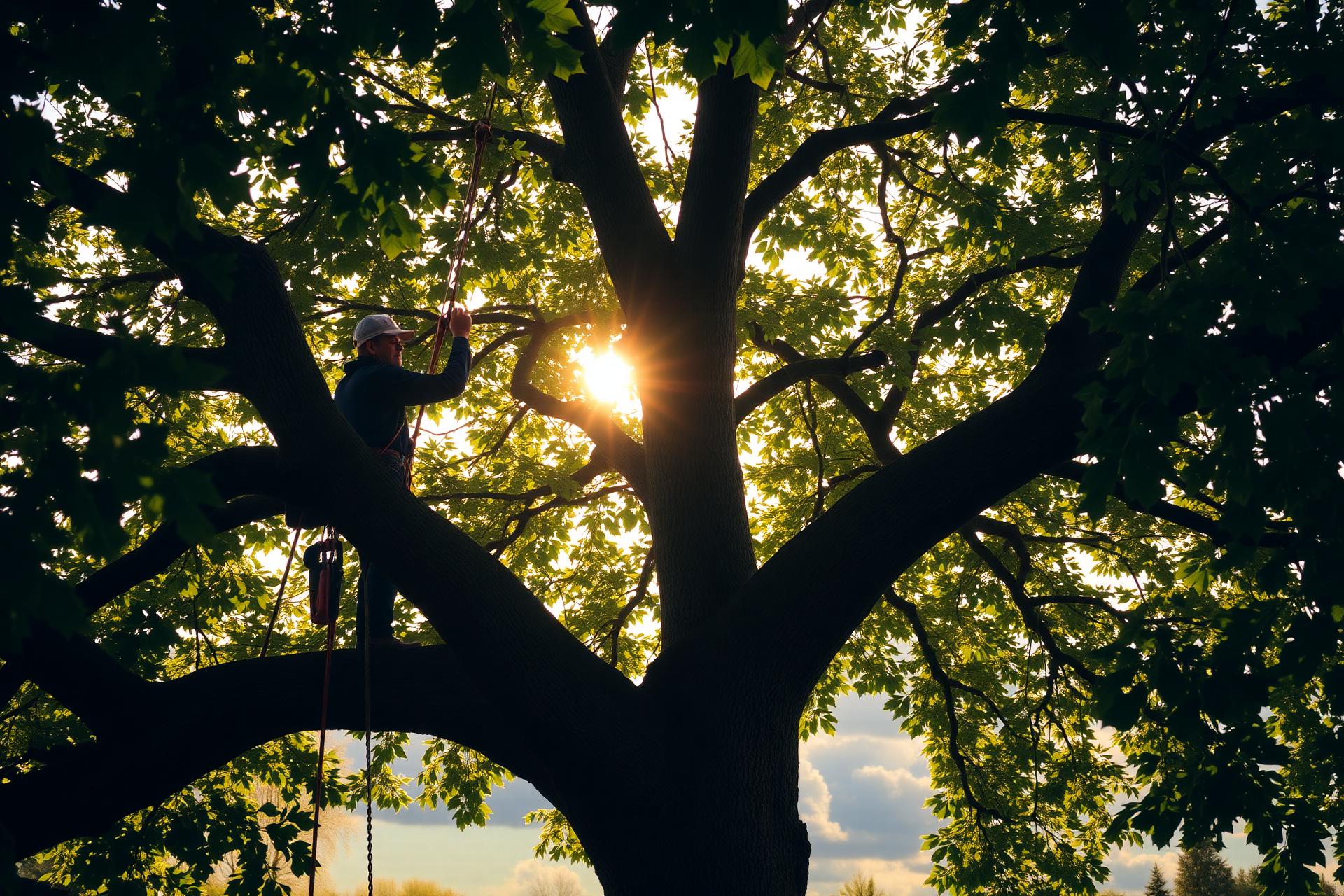
Crown Reduction for Silver Birch Trees
Betula pendula · also known as Warty Birch
The most popular garden tree in the UK. And the one most likely to overhang a neighbour's garden within ten years.
Mature height
15–20m
Mature spread
8–10m
Annual growth
40–60cm (when young)
Avoid cutting
February to April (sap bleed)
Why reduce a silver birch
The case for reduction
Silver birch is the most popular ornamental tree sold in UK garden centres, and its elegant form and light canopy make it an attractive choice for smaller gardens. The issue is that 'smaller gardens' and '20-metre trees' are not a natural combination. Within 10–15 years of planting, many birches are overhanging neighbouring properties, blocking light, and dropping debris into adjacent gutters.
Species profile
- Mature height
- 15–20m
- Mature spread
- 8–10m
- Growth rate
- Moderate to fast
- Annual growth
- 40–60cm per year in establishment years; slower in maturity
- Lifespan
- 60–90 years, relatively short-lived compared with other UK native trees
- Commonly found in
- Domestic gardens of all sizes, particularly smaller plots; woodland edges; naturalistic garden schemes
- TPO likelihood
- Low to moderate
- Clay planting distance
- 10m on high-shrinkage clay (NHBC Zone H)
How it responds
- Tolerance
- Moderate, Birch tolerates reduction reasonably well but is more sensitive than sycamore or lime. Large cuts on older specimens may not compartmentalise as efficiently. Conservative reductions, made to good lateral branches, give better long-term results.
- Regrowth vigour
- Moderate, Regrowth is steady rather than explosive. A birch reduced properly will need follow-up work every 4–6 years.
- Max reduction
- 20% per visit, A maximum of 20% removal per visit is appropriate for most birch specimens, keeping stress within manageable levels.
When to do the work
Best season: Late summer to early autumn (August–October) or early spring (late March to April after bud break). Avoids the late winter and early spring window when sap pressure is at its peak and cutting causes significant sap bleed from wounds.
Avoid: February through early April. Birch bleeds sap heavily when cut during the period of rising sap pressure before bud break. The bleed is not fatal to the tree but can be substantial, and it is avoidable by choosing the right timing.
Nesting: Nest check required before any work between March and August.
Warning signs to look for
- • Weeping branches overhanging a fence line or neighbouring property
- • Debris, catkins, leaf drop, consistently blocking adjacent gutters
- • Light reduction to south-facing areas that was not a problem when the tree was planted
- • A noticeable lean toward a building or structure
Disease & pest notes
Birch polypore fungus (Fomitopsis betulina) produces distinctive bracket-shaped fruiting bodies on the trunk and indicates internal decay. An arborist should assess any birch with polypore brackets before reduction, the structural integrity of major limbs may be compromised. Bronze birch borer is not currently established in the UK but is worth monitoring as ranges shift. Birch leaf miner is common but cosmetically minor.
Aftercare
Birch is relatively short-lived. A tree approaching 80–90 years will benefit from a health assessment alongside any crown reduction decision, it may be more appropriate to manage decline than to invest in reduction of a tree nearing the end of its natural lifespan. For younger trees, post-reduction care is straightforward: no wound sealant, monitor for callus development, return in 4–6 years.
Legal considerations
Birch is less commonly TPO-protected than oak or beech, but orders do exist. Conservation area rules apply for any birch over 75mm diameter at 1.5m from ground level.
Cost indicator
Moderate, birch is not typically as time-intensive as oak or large sycamore, but the sap bleed timing restriction means scheduling is less flexible than with some other species.
FAQs
Silver Birch reduction questions
Why is my birch 'bleeding' after it was pruned in winter?
Birch builds significant sap pressure before bud break in late winter and early spring. If cut during this period, sap flows freely from wounds, sometimes in large volumes. It will stop on its own and does not harm the tree, but it is entirely avoidable by timing work to late summer or after bud break in spring.
My silver birch is overhanging my neighbour's garden. Do I need their permission to reduce it?
You have the right to reduce branches overhanging your property boundary. However, best practice is to discuss the work with your neighbour first, arrange it through a qualified arborist, and ensure the work is done properly rather than roughly cutting back at the boundary line.
Is silver birch a good tree to have near a house?
Birch has a relatively low water demand and moderate root spread, so it poses less subsidence risk than oak, willow, or poplar on clay soils. The main management issue is its height relative to garden size, not its root behaviour.
Other species
Browse more trees
Oak
Quercus robur
The most common large tree in English gardens. And one of the most commonly protected.
Sycamore
Acer pseudoplatanus
Fast, vigorous, and seemingly everywhere. Sycamore is the tree that never quite fits the space it's been given.
Common Lime
Tilia × europaea
The most forgiving tree to reduce. Also the one that grows back fastest.
Tree outgrown its setting? Let's reduce it properly.
Free no-obligation site visit, fixed quotes, UK-wide coverage.