
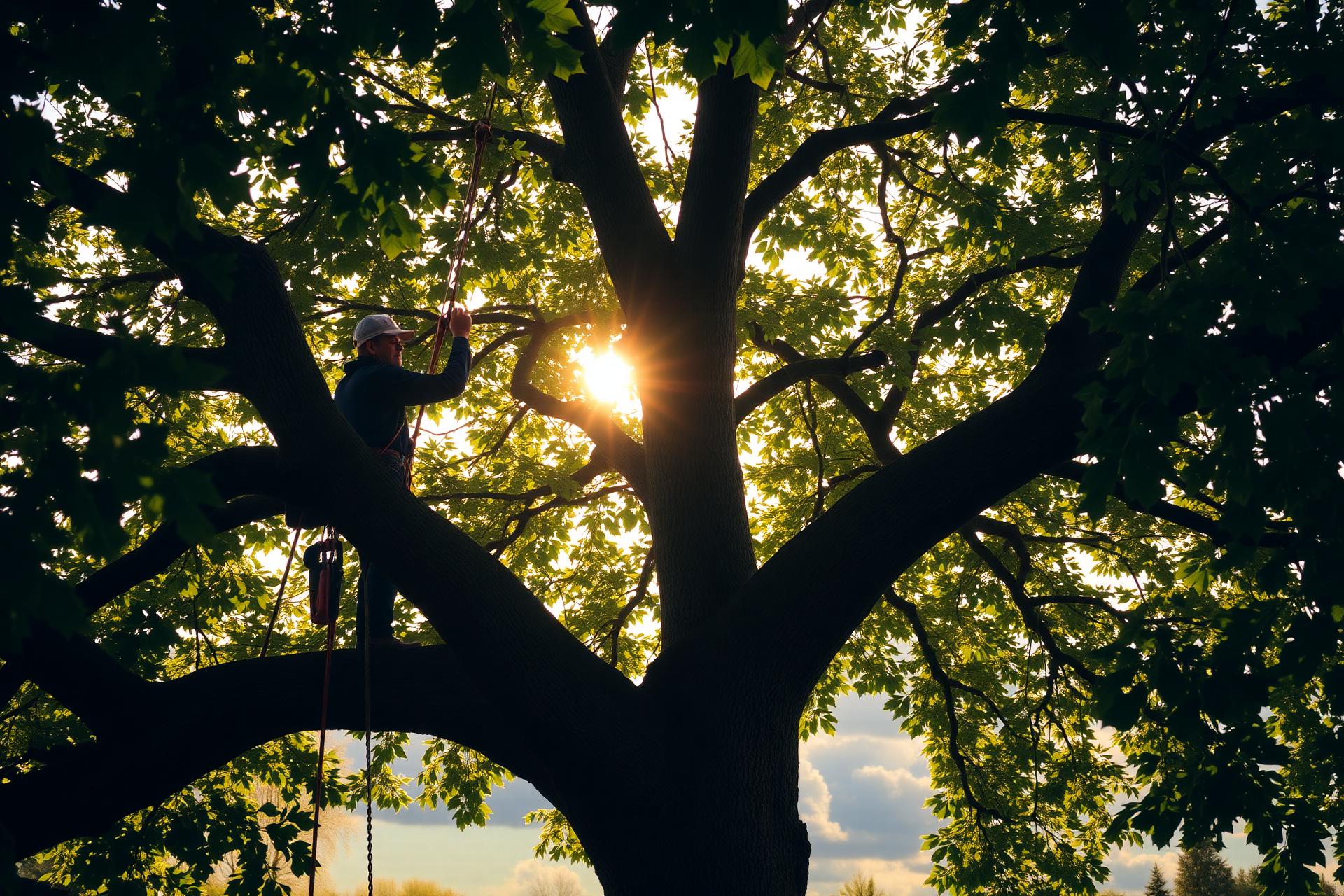
Crown Reduction for Lime Trees
Tilia × europaea · also known as Linden
The most forgiving tree to reduce. Also the one that grows back fastest.
Mature height
25–30m
Mature spread
12–15m
Annual growth
30–60cm
Max recommended reduction
30% per visit
Why reduce a common lime
The case for reduction
Lime trees are planted extensively in UK streets and parks because they tolerate urban conditions and respond well to management. The problem is that the management has to keep happening. An unmanaged lime grows tall quickly, produces prolific basal and branch epicormic shoots, attracts aphids that drip sticky honeydew onto pavements and cars below, and can dominate adjacent gardens with dense shade. Reduction is the core management tool.
Species profile
- Mature height
- 25–30m
- Mature spread
- 12–15m
- Growth rate
- Fast
- Annual growth
- 30–60cm per year
- Lifespan
- 500+ years
- Commonly found in
- Streets, avenues, large gardens, parks, historic estates
- TPO likelihood
- High, street limes are frequently TPO-protected by local authorities
- Clay planting distance
- 12m on high-shrinkage clay (NHBC Zone H)
How it responds
- Tolerance
- Excellent, Common lime is the most reduction-tolerant large tree in the UK. It can sustain significant crown removal and responds vigorously. The tolerance is both an advantage and a management challenge.
- Regrowth vigour
- Very high, the highest of any common UK species, Lime will return to close to its pre-reduction height and spread within 3–5 years without follow-up management. Epicormic growth is prolific along all major branches and the trunk base.
- Max reduction
- 30% per visit, Up to 30% can be removed in a single visit. Lime's exceptional tolerance supports this, but it does not reduce the need for a planned follow-up programme.
When to do the work
Best season: Late winter to early spring, January through March. Dormancy period, lower aphid pressure, wounds heal well with the approaching growing season.
Avoid: No species-specific restriction, but late spring and summer work produces more immediate epicormic response. Not a contraindication, but the regrowth response is faster when the tree is in active growth. Late winter work gives the best balance of healing and managed regrowth.
Nesting: Nest check required before any work between March and August.
Warning signs to look for
- • Prolific basal shoots around the trunk base, a constant feature but worsening over time
- • Honeydew drip from aphid colonies in the canopy, indicating dense canopy and lack of light penetration
- • Significant shade over south-facing areas of garden or property
- • Branches overhanging rooflines, cables, or neighbouring properties
Disease & pest notes
Lime aphid (Eucallipterus tiliae) is endemic in common lime and produces the honeydew that is a frequent complaint from homeowners with street limes overhead. Crown reduction does not eliminate aphid infestation but it does reduce the canopy density that allows colonies to establish. Lime leaf miner (Phyllonorycter issikii) is cosmetically damaging but not a structural threat.
Aftercare
Budget for a follow-up programme. A lime tree managed on a 3–5 year reduction cycle is realistic and manageable. One that is reduced once and then left will return to its previous state within a few years. Epicormic shoots on the trunk and major branches should be removed at each visit.
Legal considerations
Street limes are frequently protected by TPOs. Privately owned lime trees in large gardens are also commonly protected, particularly on older properties. Check with your local planning authority before any work. Conservation area notifications apply as standard.
Cost indicator
High, mature limes reach significant heights, require specialist access equipment, and the volume of material to be removed and disposed of is substantial.
FAQs
Common Lime reduction questions
My lime tree is dripping sticky residue on my car and garden furniture. Will crown reduction help?
It will reduce it. The sticky honeydew comes from aphid colonies in the canopy. Crown reduction thins the canopy, improves air circulation, and makes the environment less hospitable for aphid populations. It will not eliminate the issue entirely but most owners report a significant improvement.
How often does a lime tree need to be reduced?
On a managed programme, every 3–5 years is typical. Lime is the most vigorous UK species for regrowth, so a longer cycle than that tends to produce a tree that has effectively outgrown its previous reduction.
My lime tree is a street tree outside my property. Can I arrange reduction myself?
If the tree is in the highway, it is the responsibility of the local authority, not the adjacent property owner. Contact your council's tree or highways department. If it is within your property boundary but in a street setting, check whether it has a TPO before arranging any work.
Other species
Browse more trees
Oak
Quercus robur
The most common large tree in English gardens. And one of the most commonly protected.
Sycamore
Acer pseudoplatanus
Fast, vigorous, and seemingly everywhere. Sycamore is the tree that never quite fits the space it's been given.
Poplar
Populus spp.
Fast, tall, and frequently planted too close to everything.
Tree outgrown its setting? Let's reduce it properly.
Free no-obligation site visit, fixed quotes, UK-wide coverage.