
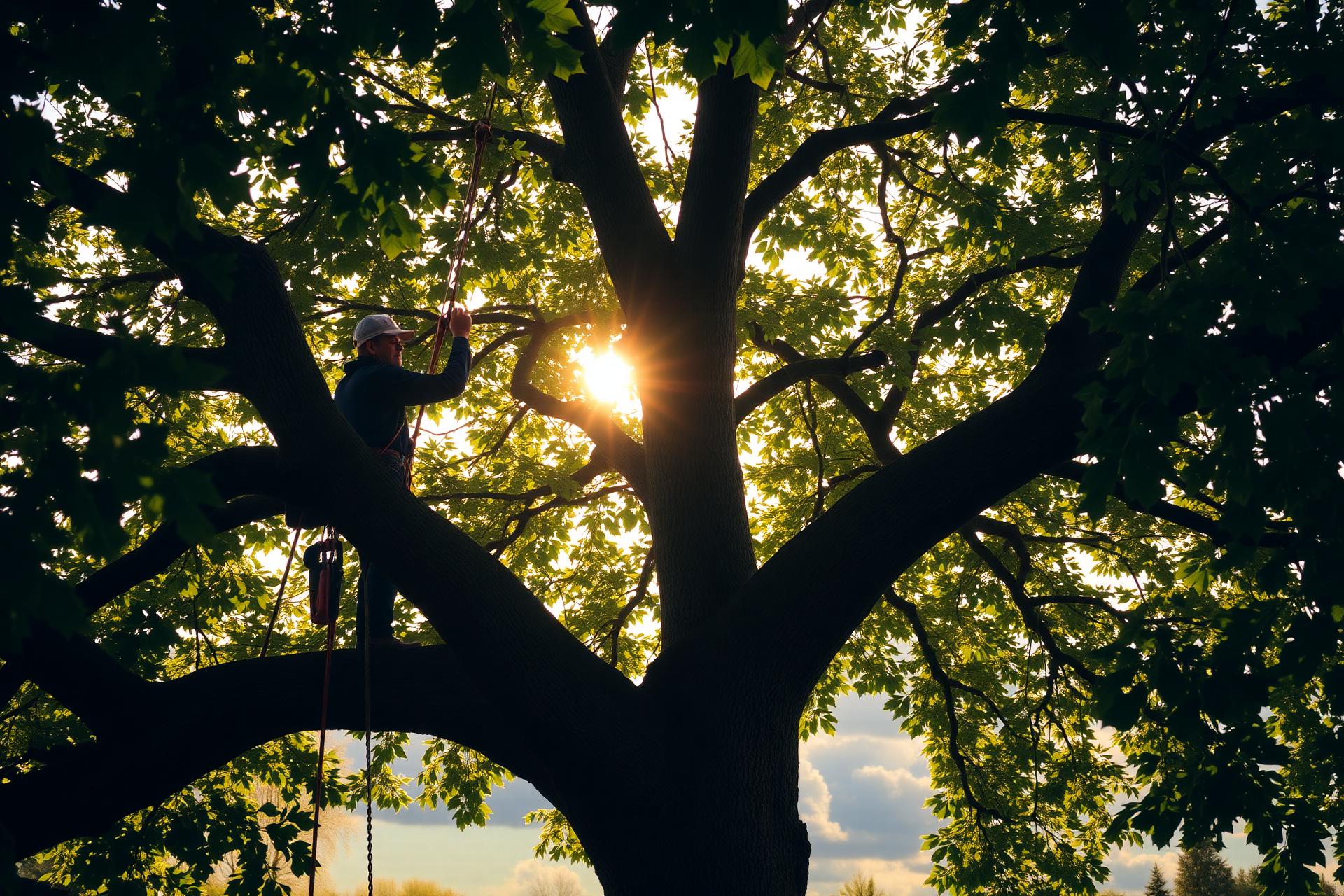
Crown Reduction for Cedar Trees
Cedrus spp. · also known as Cedar of Lebanon, Atlantic Cedar, Deodar Cedar
Cedar is magnificent, long-lived, and less forgiving of poor reduction work than almost any other tree in UK gardens.
Mature height
25–35m
Mature spread
15–30m
Annual growth
20–40cm
Max recommended reduction
15–20% per visit
Why reduce a cedar
The case for reduction
Cedars are planted in larger gardens for their architectural form and longevity. Over decades, they grow to dominate their setting, sometimes to the point where the canopy significantly overhangs buildings, blocks light, or creates a wind loading concern. Crown reduction is possible but requires conservative specification and an arborist experienced with conifers. Getting this wrong is visible for a very long time.
Species profile
- Mature height
- 25–35m
- Mature spread
- 15–30m
- Growth rate
- Slow to moderate
- Annual growth
- 20–40cm per year once established
- Lifespan
- 1,000+ years in natural habitat; hundreds of years in UK gardens
- Commonly found in
- Larger suburban gardens, estates, parks, Victorian properties, churchyards
- TPO likelihood
- High, mature cedars are among the most commonly protected trees in larger garden settings
- Clay planting distance
- 15–20m on high-shrinkage clay (treat as large conifer; site-specific assessment recommended)
How it responds
- Tolerance
- Moderate, more conservative than broadleaved species, Cedar tolerates modest crown reduction provided cuts are made within the live foliage zone and back to suitable lateral branches. Unlike most conifers, cedar can regenerate to some degree from older wood, but this should not be tested by over-specification. It is far more sensitive than broadleaved species and should be treated conservatively.
- Regrowth vigour
- Slow but steady, Cedar regrows slowly after reduction, which is both an advantage and a reason to be conservative with the specification. What you see after reduction is largely what you will see for several years.
- Max reduction
- 15% per visit, A maximum of 15–20% is appropriate, with cuts kept within the live foliage zone. Cutting back into bare or old wood should be avoided.
When to do the work
Best season: Late summer to early autumn, August to September. Avoiding the peak of summer heat stress. Late summer timing allows wounds to begin healing before winter without the intense heat of high summer. Avoiding spring growth flush is also advisable.
Avoid: Midwinter and peak summer (July–August). Extreme cold or extreme heat both stress freshly reduced conifers. The late summer window is a practical balance.
Nesting: Nest check required before any work between March and August. Cedar trees in garden settings frequently host nesting birds.
Warning signs to look for
- • Lower branches sweeping across rooflines, outbuildings, or conservatory glazing
- • The canopy is casting significant shade over a proportion of the garden from early spring
- • Wind loading on a large flat-topped or heavily one-sided crown is visibly significant in high winds
- • The tree hasn't been assessed by a qualified arborist with conifer experience
Disease & pest notes
Cedar bark beetle (Phloeosinus spp.) can affect stressed cedars. Root rots (Phytophthora spp., Armillaria) are a concern on some sites. Any cedar showing significant dieback, resin bleeding from the bark, or visible fungal growth should be assessed before reduction work is specified.
Aftercare
Monitor exposed cut surfaces over the following growing season. Cedar's slow regrowth means any issues with wound closure will be apparent relatively slowly. Do not apply wound sealant. Avoid any soil disturbance within the root protection area for at least a full year after reduction.
Legal considerations
Mature cedars are frequently TPO-protected, particularly in Victorian and Edwardian garden settings. An arborist's report is strongly advisable in support of any TPO consent application, the conservative nature of the appropriate specification should be clearly evidenced to the LPA.
Cost indicator
High, cedar work requires specialist experience, appropriate access equipment, and careful specification. This is not a species where selecting the lowest quote is advisable.
FAQs
Cedar reduction questions
Can a cedar tree be significantly reduced in size?
Not in the way a sycamore or lime can. Cedar should be reduced conservatively, no more than 15–20% in a single visit, with cuts kept within the live foliage zone. Removing the structural character of a cedar or cutting back into old wood produces results that are both harmful to the tree and visually poor.
The lower branches of my cedar are sweeping across my roof. Can these be removed?
Lower limb removal, crown lifting, is a less stressful operation for cedar than full crown reduction, and may be a more appropriate solution for lower branches contacting a building. An arborist can advise on whether lifting, reduction, or a combination of both is appropriate.
My cedar has a TPO. How do I apply for consent to reduce it?
Apply to your local planning authority through the Planning Portal, supported by an arborist's report specifying the work to be carried out and the reasons for it. Given cedar's sensitivity, a well-specified, conservative reduction plan with a qualified arborist's endorsement gives the best prospect of consent.
Other species
Browse more trees
Oak
Quercus robur
The most common large tree in English gardens. And one of the most commonly protected.
Sycamore
Acer pseudoplatanus
Fast, vigorous, and seemingly everywhere. Sycamore is the tree that never quite fits the space it's been given.
Common Lime
Tilia × europaea
The most forgiving tree to reduce. Also the one that grows back fastest.
Tree outgrown its setting? Let's reduce it properly.
Free no-obligation site visit, fixed quotes, UK-wide coverage.