
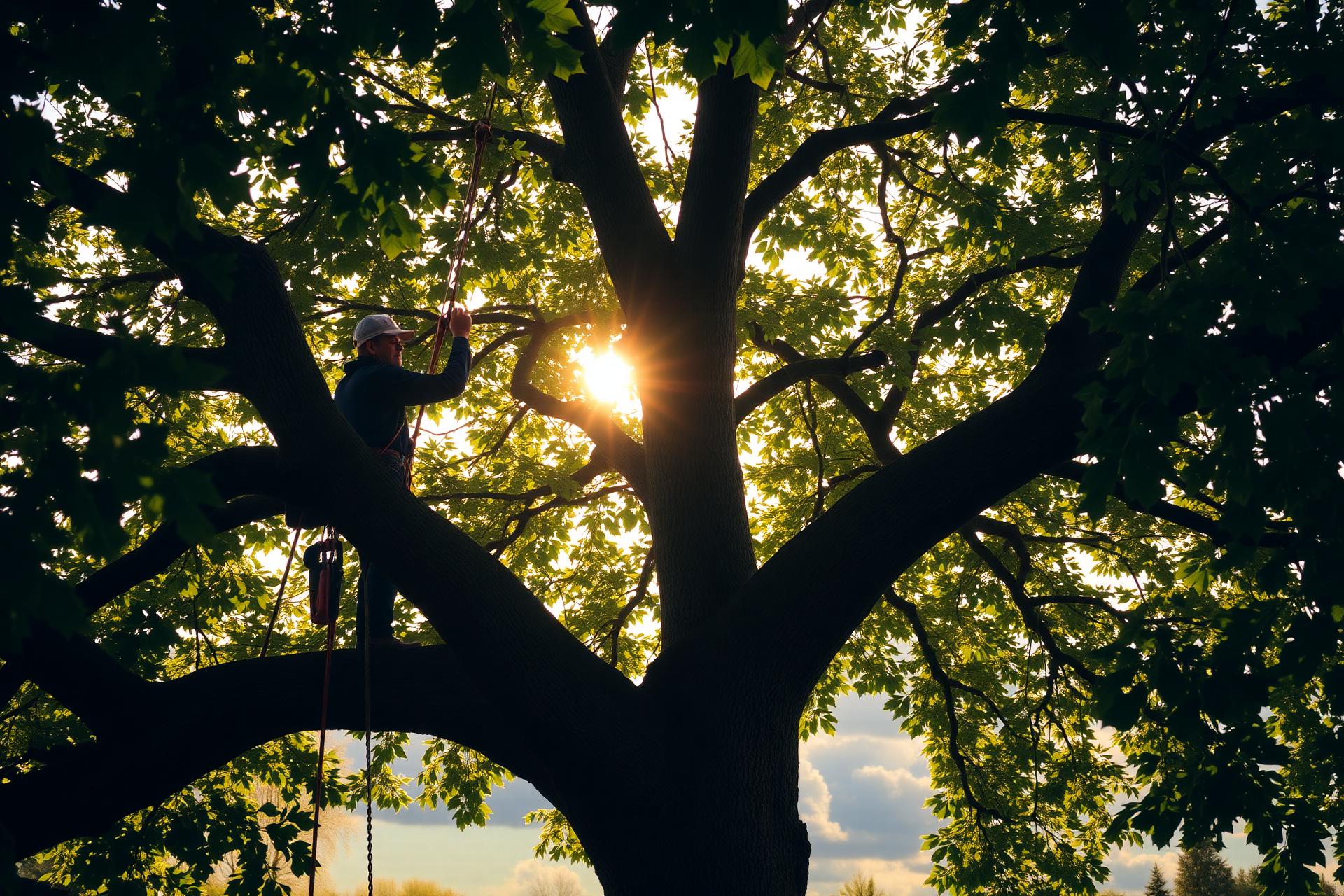
Crown Reduction for Horse Chestnut Trees
Aesculus hippocastanum
Generous shade, structural branches, and health challenges that make assessment more important than ever.
Mature height
20–25m
Mature spread
15–20m
Annual growth
30–40cm
Safe distance on clay
23m (NHBC Zone H)
Why reduce a horse chestnut
The case for reduction
Horse chestnut develops a broad, spreading crown that generates significant shade and frequently overhangs boundaries and structures. Major structural branches can extend 10–15m from the trunk at maturity. Crown reduction manages both the spread and the structural loading on individual limbs, which is particularly relevant because horse chestnut has a tendency toward stem failure at branch unions, a structural characteristic that makes managing crown weight worthwhile.
Species profile
- Mature height
- 20–25m
- Mature spread
- 15–20m
- Growth rate
- Moderate
- Annual growth
- 30–40cm per year
- Lifespan
- 200–300 years
- Commonly found in
- Larger gardens, parks, school grounds, avenue planting
- TPO likelihood
- Moderate to high
- Clay planting distance
- 23m on high-shrinkage clay (NHBC Zone H)
How it responds
- Tolerance
- Moderate, Horse chestnut tolerates reduction reasonably well in healthy trees. Trees affected by bleeding canker are more sensitive and require careful assessment before work is specified.
- Regrowth vigour
- Moderate, Regrowth is steady and manageable. A well-reduced horse chestnut typically needs follow-up work every 4–6 years.
- Max reduction
- 25% per visit, Up to 25% in a single visit for a healthy specimen. Conservative reductions of 15–20% are more appropriate for canker-affected trees.
When to do the work
Best season: Late winter, January to early March. Dormancy period, lower disease pressure. The tree's wound compartmentalisation is most effective when it can respond through a full growing season.
Avoid: No specific seasonal restriction beyond nesting season. Standard nesting season precautions apply. Bleeding canker is not directly linked to pruning season, but work on infected trees should be carefully specified to avoid cutting into heavily cankered tissue.
Nesting: Nest check required before any work between March and August.
Warning signs to look for
- • Branches extending over buildings, fences, or neighbouring properties at significant spread
- • Oozing, dark bleeding from the bark, a key indicator of bleeding canker
- • Areas of dead bark or splits in the main stem
- • Leaf miner damage (pale blotching on leaves from July), cosmetic but indicates the tree's health context
Disease & pest notes
Bleeding canker (Pseudomonas syringae pv. aesculi) affects a significant proportion of horse chestnuts in the UK and causes bleeding lesions on bark, dead patches, and in severe cases structural decline. The Forestry Commission estimates that around 50% of UK horse chestnuts show some level of infection. Trees with active canker require arborist assessment before reduction is specified, the work should avoid cutting into infected tissue and the tree's overall prognosis should inform the investment decision. Horse chestnut leaf miner (Cameraria ohridella) is widespread but cosmetically minor.
Aftercare
Monitor for canker development after reduction, stress can trigger new lesions. Check branch unions in the crown as part of each follow-up inspection; horse chestnut is prone to bark inclusions at branch junctions that can become structural failure points as branches grow heavier.
Legal considerations
Horse chestnut is moderately commonly TPO-protected, particularly in parks and larger residential gardens. Check with your LPA before commissioning any work. Conservation area rules apply as standard.
Cost indicator
Moderate to high, the spread of mature horse chestnut and the potential need for specialist access equipment influences cost. Health assessment adds an important preliminary step.
FAQs
Horse Chestnut reduction questions
My horse chestnut has dark oozing patches on the bark. Can it still be reduced?
Possibly, but a qualified arborist should assess the extent of bleeding canker before any work is specified. The degree of infection, the tree's overall structural integrity, and the location of the lesions all affect whether reduction is appropriate and how it should be carried out.
Why do large branches sometimes fall from horse chestnuts with no warning?
Horse chestnut is prone to a phenomenon sometimes called 'summer branch drop', sudden failure of apparently healthy limbs during warm, still weather. Bark inclusions at branch junctions are a contributing factor. This is one reason why managing crown weight through reduction is worthwhile, particularly on trees over buildings or in areas with public access.
The leaves on my horse chestnut look scorched and blotchy every year. Is this a disease?
Almost certainly horse chestnut leaf miner (Cameraria ohridella), which causes pale blotching and early browning of leaves from mid-summer onward. It is cosmetically significant but does not affect the tree's structural health or its suitability for crown reduction.
Other species
Browse more trees
Oak
Quercus robur
The most common large tree in English gardens. And one of the most commonly protected.
Sycamore
Acer pseudoplatanus
Fast, vigorous, and seemingly everywhere. Sycamore is the tree that never quite fits the space it's been given.
Common Lime
Tilia × europaea
The most forgiving tree to reduce. Also the one that grows back fastest.
Tree outgrown its setting? Let's reduce it properly.
Free no-obligation site visit, fixed quotes, UK-wide coverage.