
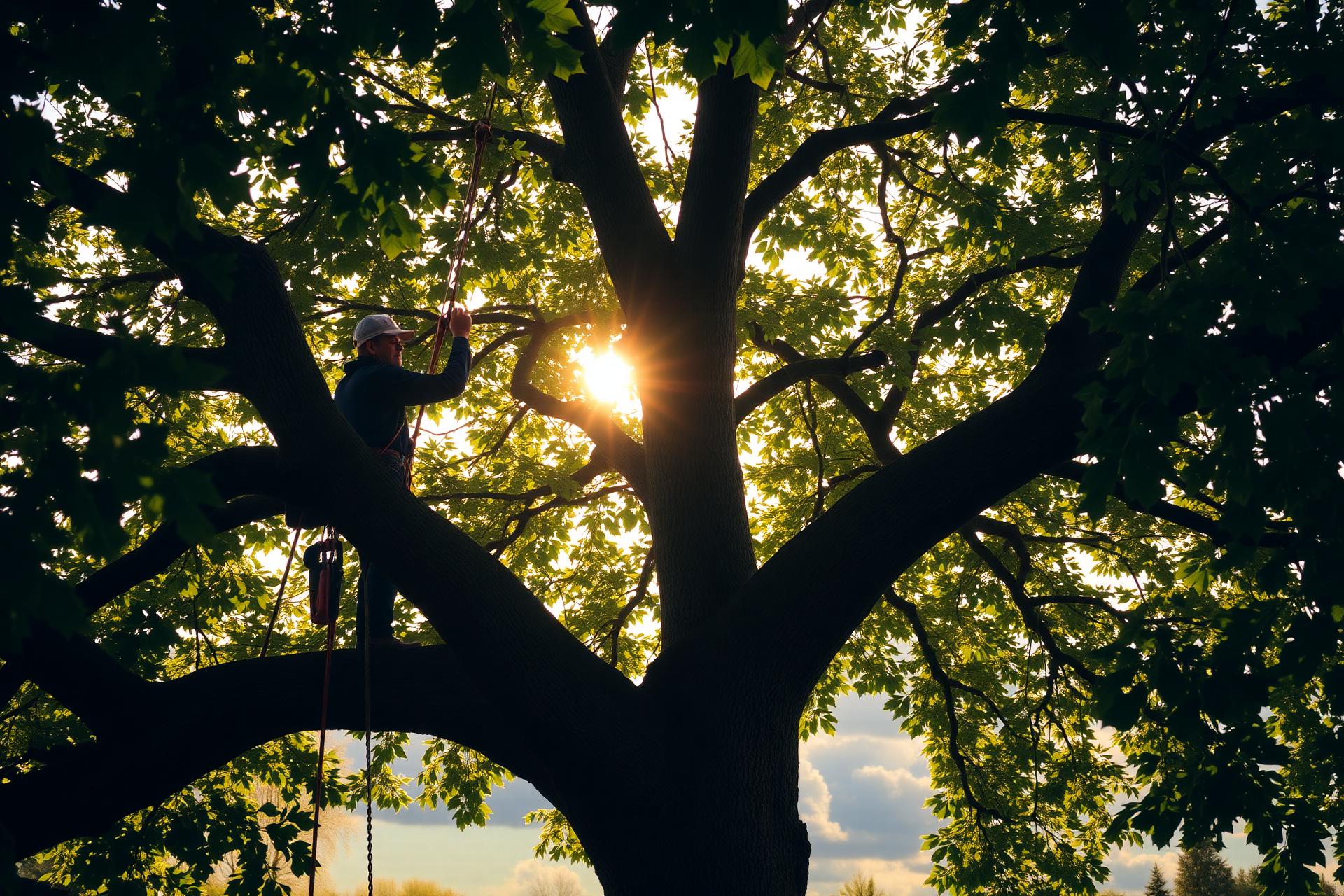
Crown Reduction for London Plane Trees
Platanus × acerifolia
The tree that built London's green canopy. And the one that generates more urban tree management jobs than almost any other.
Mature height
25–35m
Mature spread
15–25m
Annual growth
30–50cm
Max recommended reduction
30% per visit
Why reduce a london plane
The case for reduction
London plane is planted in cities for very good reasons: it tolerates pollution, poor soil, and heavy management. The management part is key. Urban planes are regularly reduced, crown-lifted, and maintained to keep them within the constraints of the street or square they inhabit, clear of buildings, and safe for pedestrian use beneath. They generate consistent, repeat demand for crown reduction work in urban settings.
Species profile
- Mature height
- 25–35m
- Mature spread
- 15–25m
- Growth rate
- Moderate to fast
- Annual growth
- 30–50cm per year
- Lifespan
- 300+ years
- Commonly found in
- City streets, urban squares, parks, riverside settings, predominantly in London and large UK cities
- TPO likelihood
- Very high, the majority of mature London planes in urban settings are TPO-protected
- Clay planting distance
- 25m on high-shrinkage clay (NHBC Zone H)
How it responds
- Tolerance
- Excellent, one of the most tolerant UK trees for significant pruning, London plane handles substantial crown reduction exceptionally well. It is one of the few large trees that regularly sustains reductions of 30% and responds productively.
- Regrowth vigour
- High, Regrowth is vigorous and predictable. Urban planes on managed cycles typically require follow-up work every 3–5 years.
- Max reduction
- 30% per visit, Up to 30% in a single visit is standard practice for London plane, consistent with its exceptional tolerance.
When to do the work
Best season: Late winter, January and February. Dormancy period, low disease pressure, wounds heal with the approaching growing season.
Avoid: No specific seasonal restriction beyond nesting season. Standard nesting season precautions apply. Plane anthracnose risk is higher in cool, wet springs but is not season-specific enough to drive timing decisions.
Nesting: Nest check required before any work between March and August, urban planes frequently host nesting birds.
Warning signs to look for
- • Crown approaching or making contact with overhead cables or building facades
- • Canopy creating significant shade over pavement areas or adjacent properties
- • Bark shedding and canopy thinning, normal for plane (exfoliating bark is species-typical) but worth monitoring for anthracnose
- • The tree hasn't been assessed since its last reduction cycle
Disease & pest notes
Plane anthracnose (Apiognomonia veneta) causes shoot dieback, leaf scorch, and canker in cool, wet springs. Established trees generally tolerate it without lasting structural damage. More significantly, plane processionary moth (Hyphantria cunea) is not yet established in the UK but represents an emerging European concern. London planes in urban settings should be monitored as part of any regular inspection programme.
Aftercare
Urban planes are typically maintained on managed cycles by local authority or estate arboricultural teams. For privately owned specimens, a 3–5 year reduction programme is standard. The tree's exceptional tolerance means it rarely requires specific post-reduction care beyond standard monitoring.
Legal considerations
The vast majority of mature London planes in urban settings carry TPOs. For planes in council-managed streets, work is the responsibility of the local authority. For privately owned planes, consent must be obtained from the LPA before any work. The TPO consent process for urban trees, where the case for management is well-established, is generally straightforward with arborist support.
Cost indicator
High, urban setting, tree height, specialist access equipment, and the frequency of TPO applications all contribute to cost. Urban planes often require road closures or traffic management for roadside work.
FAQs
London Plane reduction questions
The London plane outside my house is a council tree. Who is responsible for reducing it?
If it is in the highway, the pavement or verge, it is the local authority's responsibility. Contact your council's tree or highways department to report a concern. If it is within your property boundary, it is your responsibility to manage, and you should check for TPO status before commissioning work.
Why does the bark peel off my London plane? Is this a disease?
No, exfoliating bark is a normal and distinctive characteristic of London plane. The patches of cream, olive, and grey exposed by bark shedding are entirely normal and one of the reasons the species is visually distinctive in urban settings.
Can a London plane be heavily reduced without harming it?
Yes. London plane is exceptional in its tolerance of significant pruning and is one of the reasons it was selected for urban planting. Reductions of up to 30% are standard practice. The key is that cuts are made correctly to suitable lateral branches, not to stubs.
Other species
Browse more trees
Oak
Quercus robur
The most common large tree in English gardens. And one of the most commonly protected.
Sycamore
Acer pseudoplatanus
Fast, vigorous, and seemingly everywhere. Sycamore is the tree that never quite fits the space it's been given.
Common Lime
Tilia × europaea
The most forgiving tree to reduce. Also the one that grows back fastest.
Tree outgrown its setting? Let's reduce it properly.
Free no-obligation site visit, fixed quotes, UK-wide coverage.